
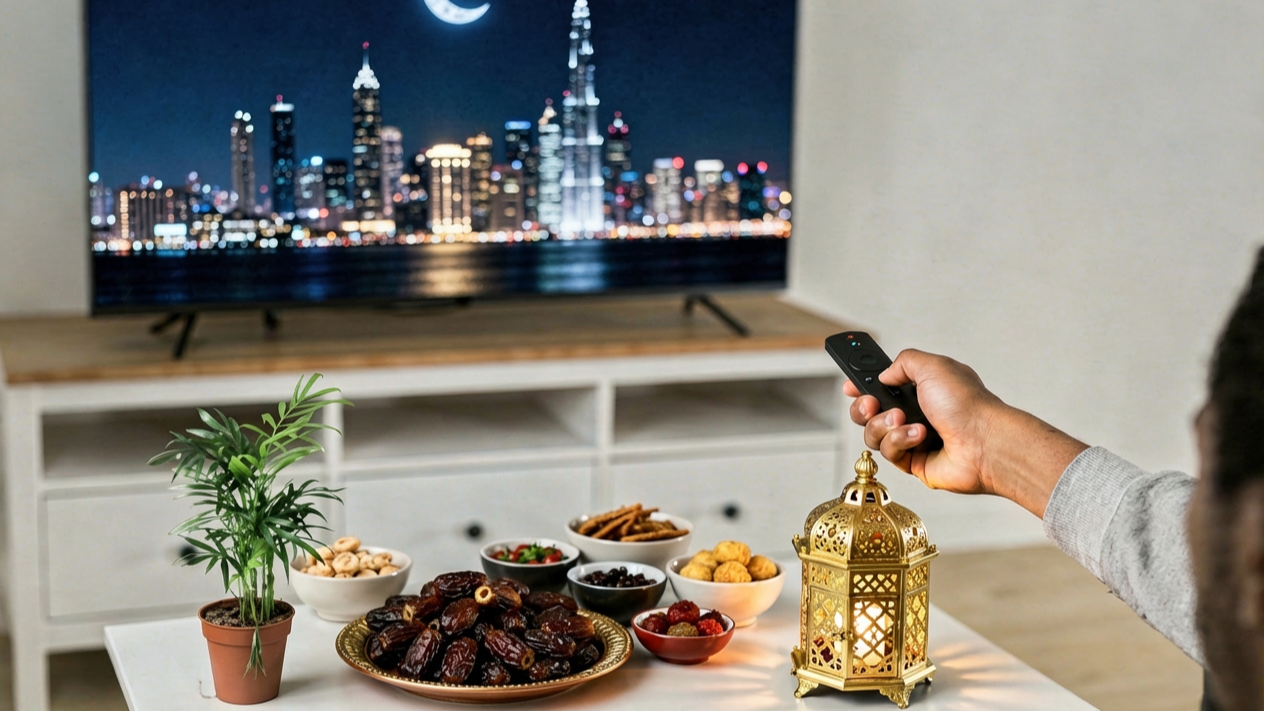
Ramadan delivers the largest video audiences of the year in the GCC. But, volume alone no longer explains its effectiveness. Today, attention, validation and action increasingly collapse into a single, connected screen experience.
What’s changed isn’t just how much people watch – it’s how decisions now happen across screens, in the same moment.
Heightened spending intent combines with retail and e-commerce uplifts of 40–60%. Audiences are more receptive, more emotionally engaged, and more likely to act. And increasingly, they’re doing all of this while moving fluidly between the TV in front of them and a mobile device in their hand.
The question for brands during this period is whether their media plans reflect this connected reality or if they are still treating screens as doing separate jobs.

Ramadan reshapes behaviour, not just viewing time
Ramadan consistently delivers the biggest video audiences of the year, but volume alone doesn’t explain its effectiveness.
Viewing during the Holy Month is:
- Highly contextual: 92% of consumers expect advertising to respect cultural and spiritual values.
- Social and co-viewed: 60–70% of content is watched with family, especially after iftar.
- Time-structured: with clear shifts in attention across the evening.
Pre-iftar builds anticipation and intent.
Post-iftar (roughly 8pm–1am) is the strongest window for high-attention, lean-back storytelling.
Late night, ahead of suhoor, sees mobile usage rise again – driving search, comparison, and conversion.
This isn’t fragmented behaviour. It’s a connected journey compressed into a single evening.

The big screen still leads, but it doesn’t work alone
Connected TV dominates the living room during Ramadan, delivering shared attention, emotional context, and credibility at scale. It’s also where many consumers still discover new brands, particularly in categories like food, home, hospitality, and lifestyle.
Importantly, CTV isn’t just a brand play. During Ramadan, campaigns regularly deliver measurable uplifts in site visits and downstream action following exposure.
What’s changed is what happens next.
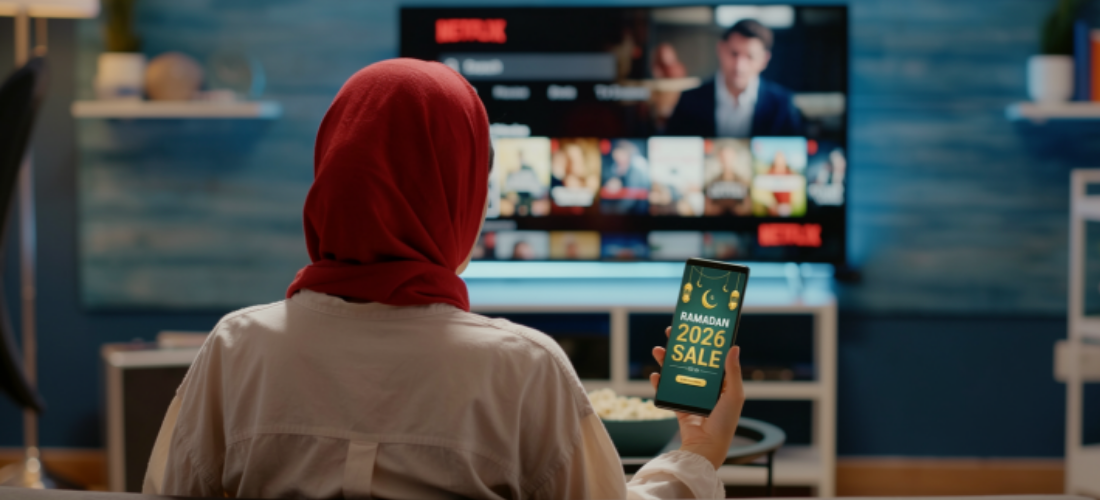
Mobile doesn’t replace the big screen – it responds to it. Viewers pick up their phones to search, validate, check availability, or compare options in real time, reinforcing what they’ve just seen on TV.
This screen hierarchy matters. Planning sequences matter and silos don’t.
Why omnichannel video matters more during Ramadan
This is where connected, omnichannel video formats come into their own.
Formats like VDX allow brands to deliver emotionally rich storytelling across CTV, while seamlessly extending that experience onto mobile and desktop – maintaining message consistency, timing and relevance across devices.
Household sync between CTV and mobile means exposure on the big screen can trigger follow-up messaging on personal devices, turning attention into action without forcing unnatural jumps in behaviour. “Brands use household sync between CTV and mobile mainly to make CTV perform like digital — driving installs, conversions, and measurable lift across devices. After a CTV exposure, household graphs trigger follow‑up ads on mobile and display to other devices in that household,” explained Irfan S Mirza , Head of Digital at Team Red Dot.
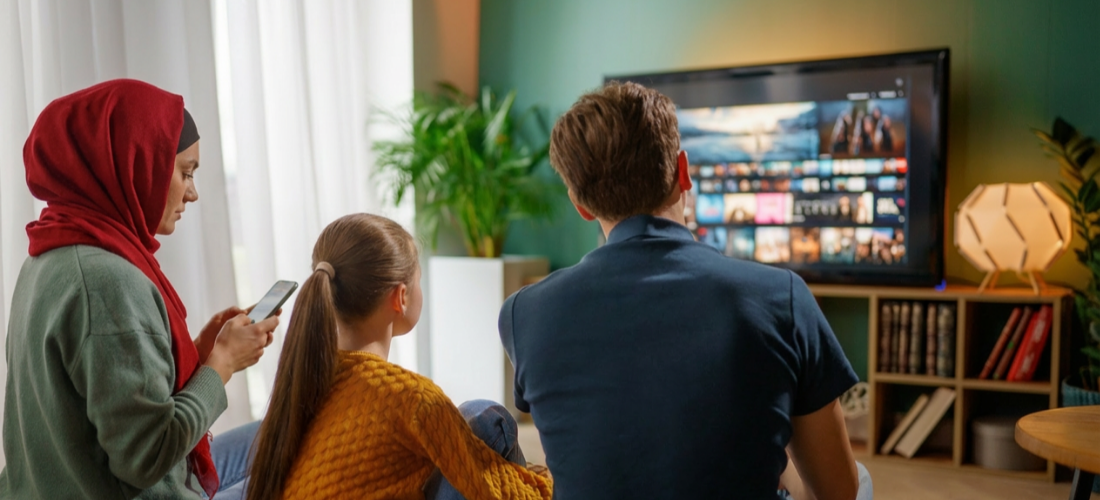
As one Ramadan evening increasingly looks like this: a family gathers after iftar. A brand story plays on the TV. A phone is picked up. A search is made. A decision follows, often before the programme even ends.
Discovery, validation, and action no longer happen in neat stages. They happen together.
What this means for brands ahead of Ramadan
Ramadan is no longer a moment where:
- Mobile can carry performance alone, or
- TV can build brand in isolation
Brands that plan device roles in sync – aligning CTV, mobile, and digital video into a single connected experience – are better placed to earn attention, trust, and action during the most competitive season of the year.
In a month defined by meaning and moments that matter, better-connected media isn’t just more efficient.
It’s more effective.
Sources: Google Ramadan Insights, regional OTT & broadcaster studies, MBC Group, Shahid, Nielsen, RedSeer, global CTV effectiveness benchmarks, regional retail & commerce reports