
Introduction
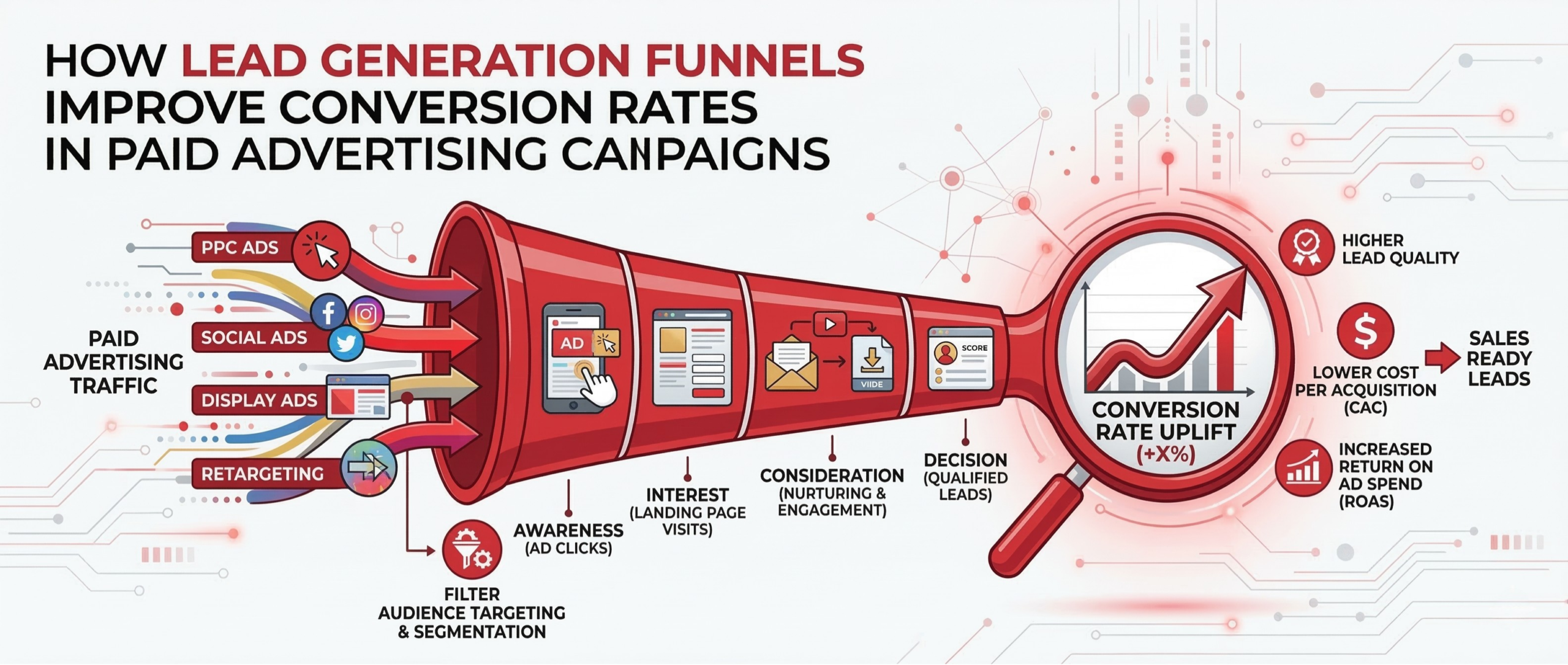
There has never been a time when paid advertising is more measurable than this time. However, conversion efficiency is not the same across industries. This is not a financial problem. It is a structural one. Most campaigns continue to work on the belief that attention equals action. It doesn’t.
User behavior has shifted. The assessment periods are more prolonged. Trust thresholds are higher. Decision journeys are stratified. This is where lead generation funnels become strategically critical.
They are not mere strategies of marketing. They are behavioral models that are meant to steer the will of the first interaction to ultimate conversion.
The Behavior Shift
What’s changed is what happens after the click. Users don’t make decisions quickly, especially in high consideration markets. They research, weigh options, opt out, and return with better-defined goals.
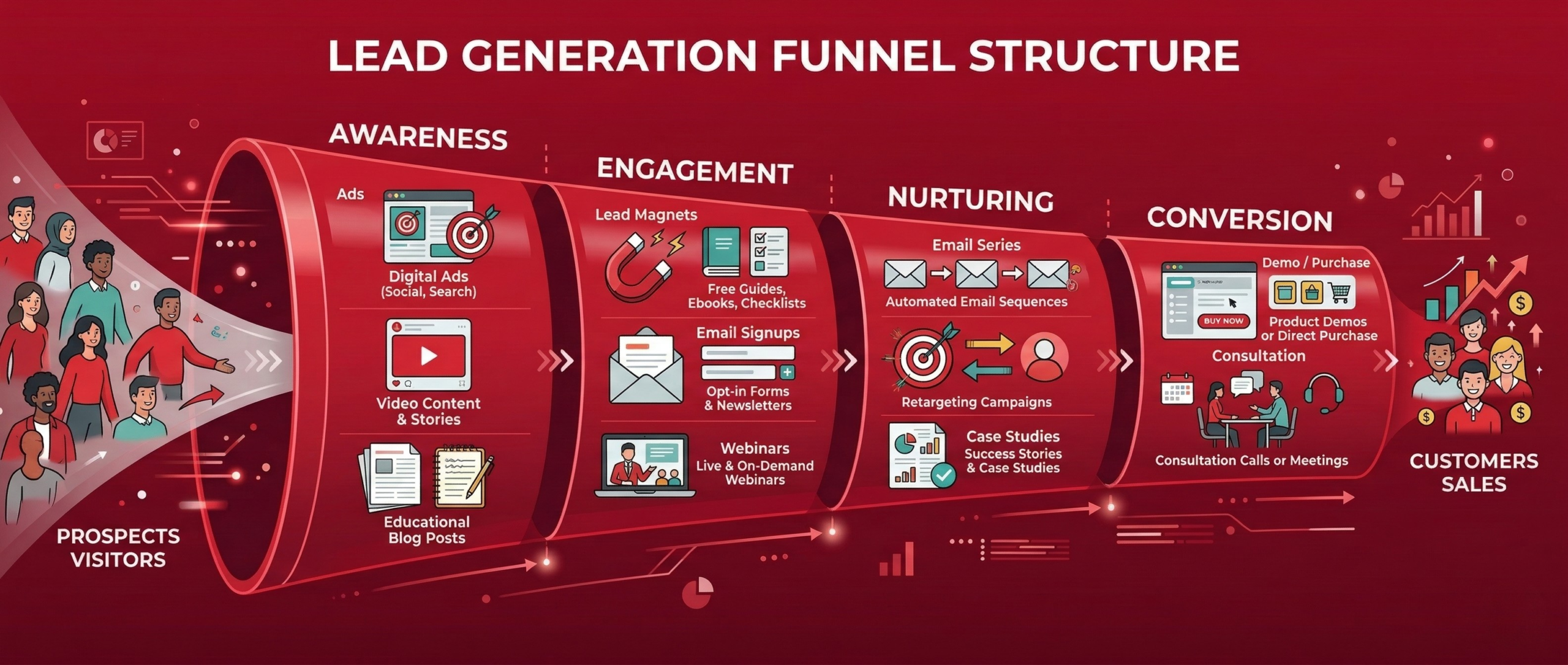
This isn’t friction. This is modern decision-making behavior. Lead generation funnels reflect this shift in behavior by abandoning forced conversion in favor of progressive engagement. They build interest through value-based interactions such as lead magnets, educational content, and personalized emails, rather than trying to close a direct sale.
This is a paradigm shift in conversion from a point to a process. And processes have higher conversion rates than point interactions.
Reconceptualizing the Assumption: Clicks Are Not Conversions.
Another myth in paid media planning is the assumption that high click-through rates equate campaign success. However, clicks show interest, not Commitment. The majority of paid traffic will go to waste without a structured follow-up.
It is at this point that the traditional landing page tactics fail. Lead generation funnels capture partial intent and convert it into measurable engagement. Micro-conversions include email sign-ups, gated content, and webinar subscriptions, which help maintain the relationship beyond the first click.
It is not only about immediate ROI. It is about the lifecycle conversion value.
Screen Role Clarification
This is not fragmented behavior. This is an interwoven experience over screens and over time. The mobile behaviors are likely to suggest discovery. Evaluation is suggested by desktop activity. The retargeting contexts suggest readiness.
Good lead generation funnels align messaging with these behavioral contexts. Relevance is built by top-of-funnel paid advertising. Mid-funnel content builds credibility and complexity. The bottom-funnel behaviors make it simple to respond and make decisions.
Sequencing planning is critical; silos are unnecessary.
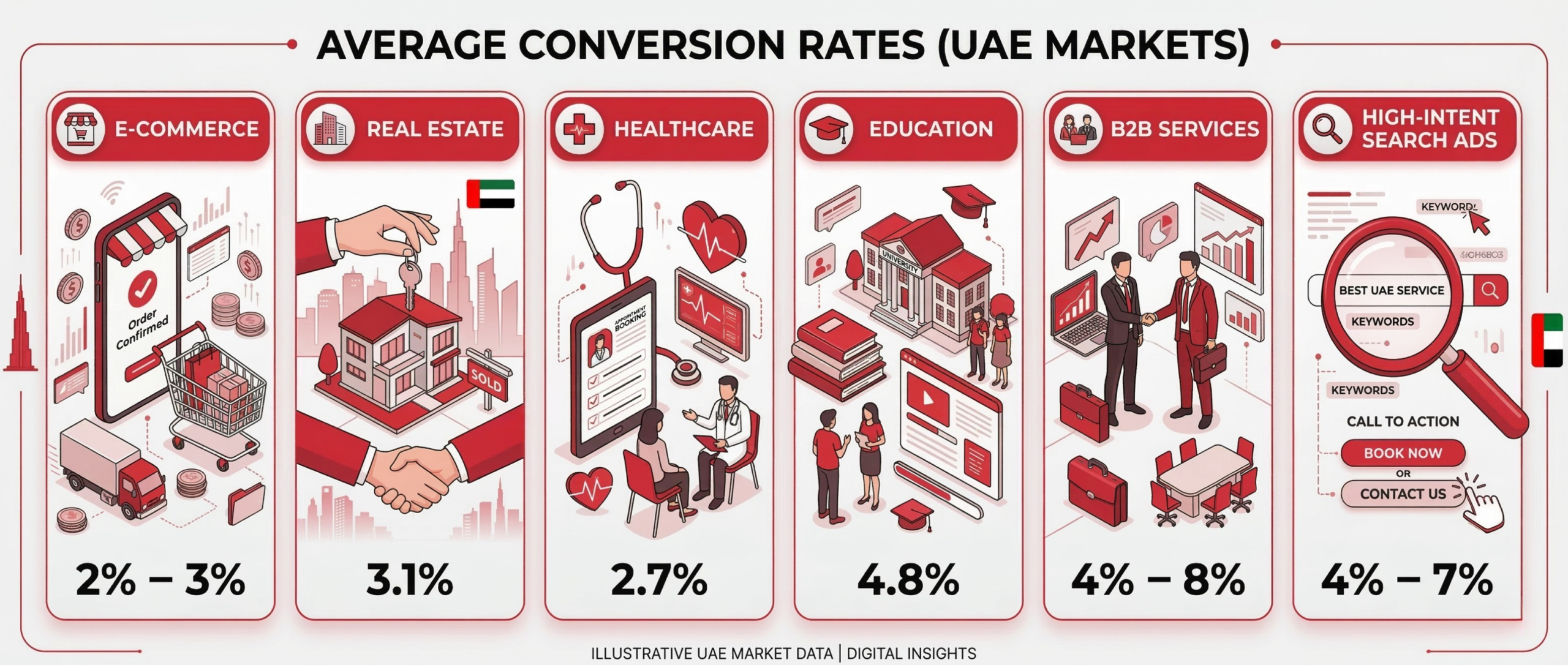
Average Conversion Rates (UAE Markets)
Technology Integration: Funnel Optimization through Data.
Modern technology integration stacks make today’s funnels possible. Marketers can now dynamically sequence funnel roles using CRM, automation, and behavioral data.
For instance, users who have engaged with educational content can be retargeted with personalized offers rather than generic ads. This step-by-step process of optimization improves relevancy at each stage.
There are selective industry data that have always shown that leads who have been nurtured have a much higher conversion rate than cold traffic. In many performance marketing campaigns, lead generation funnels with structure have helped improve conversions between 30% and 50%.
Data is not strategy. It justifies structure.
Structural Implication: Less Friction, More Intent Quality.
Direct-response campaigns assume readiness. Funnels build readiness. Cognitive resistance occurs when users are driven to make immediate purchase decisions. There is no established trust yet. Information gaps are not addressed.
Lead generation funnels systematically reduce this friction by distributing information across staged touchpoints. Every contact brings familiarity, credibility, and value. The outcome is not only an increase in the conversion rates, but also more quality conversions.
It’s more efficient. And strategically sustainable.
Strategic Consequence
Paid media inefficiency can be mistakenly diagnosed as targeting failure. In reality, it is often a funnel design issue. Brands pay a lot of money to get traffic, but pay less for the architecture of the post-click experience. This results in wastage of impressions, abandoned sessions, and cost-per-acquisition inflated metrics.
By implementing structured lead generation funnels, advertisers extend the value of each paid interaction. Unready prospects are not lost; they are cultivated. Active users do not rush because they are guided.
This enhances efficiency in conversion and minimizes acquisition waste over time. It is a compounding advantage.
Strategic Implications for Decision-Makers.
Whether paid ads create attention or not is no longer a question for marketers. They clearly do. The strategic question is whether such attention is being transformed through a deliberate behavioral model. Campaigns without lead generation funnels rely on immediacy in a delayed-decision market. Such a misfit limits the performance potential.
What is coming up is a structural change in performance marketing logic:
Paid advertisements start the process.
Funnels complete it.
Common Funnel Mistakes In Paid Advertising
- Increasing Cold Traffic to Sales Pages: Immediate conversion requests frequently fail in the absence of trust-building procedures.
- Ignoring the Middle of the Funnel: Many campaigns make significant investments in traffic but overlook content nurturing.
- Weak Lead Qualification: Campaigns produce a lot of low-intent leads in the absence of filters.
- Inadequate Systems for Follow-Up: Without automatic nurturing, leads often disengage.
- Disjointed Technology for Marketing: Funnel optimization is challenging when tools are disconnected.
Tools Commonly Used in Lead Generation Funnels
Advertising Platforms
- Google Ads
- Meta Ads (Facebook / Instagram)
- LinkedIn Ads
- TikTok Ads
Funnel & Landing Page Platforms
- ClickFunnels
- Leadpages
- Unbounce
- Webflow
CRM Systems
- HubSpot
- Salesforce
- Zoho CRM
- Pipedrive
Marketing Automation
- ActiveCampaign
- Mailchimp
- Marketo
- Klaviyo
Analytics & Tracking
- Google Analytics
- Hotjar
- Microsoft Clarity
- Google Tag Manager
Strategic Insights
Several insights are particularly noteworthy for businesses who invest in paid advertising:
- Conversion architecture is just as crucial as media expenditure.
- Compared to cold traffic, nurtured leads convert substantially better.
- Funnel visibility and optimization are enhanced by integrated marketing solutions.
- Campaign evaluation should be based on long-term customer value rather than quick conversions.
Brands with the biggest advertising budgets won’t always be the most successful in the fiercely competitive digital markets.
Conclusion
It is not all about traffic. It’s about directing intent. Lead generation funnels improve conversion rates because they align with how modern audiences evaluate, trust, and decide. They substitute transactional thinking with a sequential strategy.
They substitute pressure with progression. The winning brands will not be those with the highest spending in an increasingly competitive paid media environment. They will be those who come up with the most intelligent conversion pathways.
[Contact Us]